Commercial Office Cleaners

Office washroom and kitchen hygiene

Office washroom and kitchen cleaning: toilets, urinals, basins, sanitary disposal, fridges, microwaves and dishwashers kept hygienic. Typical UK costs.

In short: Washroom and kitchen hygiene covers the thorough cleaning and disinfection of office toilets, urinals, basins and fittings, restocking consumables, and keeping shared kitchens, fridges and appliances hygienic. It suits any office, because these are the areas where hygiene problems and complaints build up fastest. It is usually priced within regular cleaning hours at around £18 to £30 per cleaner hour, with sanitary bin servicing charged separately.

Get a free quote

Fixed price, no obligation. We aim to reply the same day.

By sending this form you agree to be contacted about your enquiry. See our privacy policy.

Office washroom and kitchen hygiene

Washrooms and kitchens take a disproportionate share of cleaning time and cause most complaints. Limescale, urine scale in urinals, smells from drains and sanitary bins, and empty soap dispensers are noticed immediately by staff and visitors. In the kitchen, sticky worktops, fridges full of forgotten food and greasy microwaves are a hygiene risk as well as an annoyance. Both areas need a methodical routine with separate, colour-coded cloths so that washroom equipment never goes near food preparation areas.

The Workplace (Health, Safety and Welfare) Regulations 1992 require employers to provide clean toilets and washing facilities, with soap, a means of drying hands and, for facilities used by women, a suitable means of disposing of sanitary dressings. A good hygiene service covers the cleaning, restocking and checking of those facilities, and coordinates with a sanitary bin provider where one is used. Kitchens are cleaned on every visit, with appliances done inside on a weekly or monthly rota.

What is included

  • Toilets and urinals cleaned and disinfected inside and out, including seats, hinges and flush plates
  • Basins, taps, mirrors, partitions and splashbacks cleaned and descaled as needed
  • Washroom floors mopped with a separate colour-coded mop and bucket
  • Soap, toilet roll and hand towels restocked, with low stock reported
  • Kitchen worktops, sinks, taps and splashbacks cleaned and sanitised
  • Microwaves, fridges, kettles, coffee machines and dishwashers cleaned inside on an agreed rota
  • Fridge clear-outs of out-of-date food on an agreed day each week
  • Coordination with sanitary bin and air freshener service providers where used

Who it is for

  • Offices where washrooms or kitchens are causing complaints
  • Multi-tenant buildings with shared washrooms managed by a landlord or agent
  • Busy offices where washrooms need a midday check as well as the main clean
  • Businesses with hard water areas where limescale builds up quickly
  • Offices with shared kitchens used heavily at lunchtime

How much does it cost?

As a guide, washroom and kitchen cleaning is normally included in regular cleaning hours at around £18 to £30 per cleaner hour. Sanitary bin servicing by a specialist is charged separately and often costs roughly £60 to £150 per bin per year depending on how often it is changed. See our full cost guide.
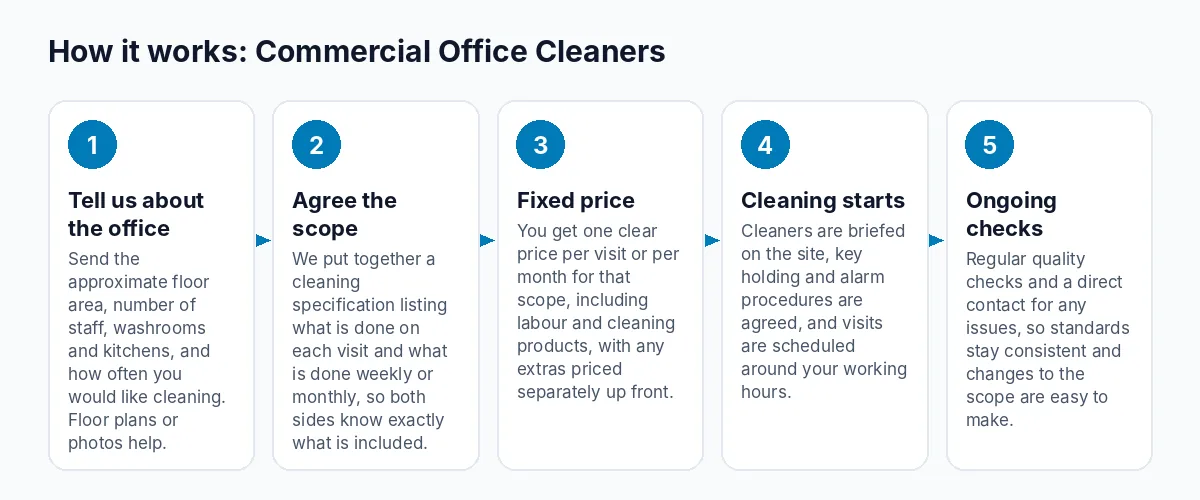
How it works

How office washroom and kitchen hygiene works, step by step
  1. Count and check

    Washrooms, cubicles, urinals and kitchens are counted and their condition noted, including any limescale or drainage issues.

  2. Colour-coded routine

    Separate cloths and mops are allocated for toilets, basins and kitchens so there is no cross-contamination between areas.

  3. Consumables plan

    You decide whether to supply consumables or have them supplied and recharged, and a restocking routine is agreed.

  4. Rota for appliances

    Inside-appliance cleaning and fridge clear-outs are put on a fixed rota so staff know when to remove their food.

Office washroom and kitchen hygiene: FAQs

Is an office legally required to have sanitary bins?

Under the Workplace (Health, Safety and Welfare) Regulations 1992, toilets used by women must have suitable means for disposing of sanitary dressings, so in practice most offices provide sanitary bins in female and accessible toilets. Many businesses also add them in male toilets. The bins are usually serviced by a specialist washroom provider, while the office cleaners clean around and report any issues.

Why do office urinals smell even after cleaning?

Persistent smells usually come from urine scale building up in the trap and waste pipe, which ordinary daily cleaning does not remove. Regular descaling with a suitable acid descaler, and checking that waterless urinal cartridges are changed on time, normally solves it. Blocked floor drains and dry traps are other common causes worth checking.

What does colour coding mean in washroom cleaning?

Colour coding means using different coloured cloths, mops and buckets for different areas so germs are not spread from toilets to sinks or kitchens. A common UK scheme uses red for toilets and urinals, yellow for washroom basins in many schemes, green for kitchens and blue for general office areas. The key is that the scheme is written down and followed every time.

Who is responsible for cleaning the inside of the office fridge?

Agree it in the specification. Most cleaners will clean the inside of fridges weekly or monthly, but they will not decide what food to throw away unless there is a clear policy, such as clearing everything unlabelled or out of date every Friday afternoon. Telling staff about the policy in advance avoids disputes.

Get a quote for office washroom and kitchen hygiene

Send a few details and get one clear, fixed price, usually the same day.

Get a quote

Last updated 6 November 2026